

The Beginning
Foundations that influence a lifetime.
The first eight weeks lay the groundwork for a lifetime of learning. Through intentional, age-appropriate enrichment, socialization, and early training, we nurture confidence, resilience, and adaptability while respecting each puppy’s individual development

Birth – 2 Weeks
Gentle Beginnings
In the earliest days, development happens quietly. Puppies sleep, nurse, and grow — but their nervous systems are rapidly forming.
From days 3–16, we incorporate Early Neurological Stimulation (ENS) — short, gentle exercises designed to introduce mild, safe challenges during a critical growth window.
We also practice Early Scent Introduction (ESI), offering one new scent each day to encourage early environmental awareness.
Handling is calm, consistent, and predictable. Even simple touch — paws, body, gentle repositioning — begins laying the groundwork for trust and cooperative care later in life.
These moments are subtle, but they matter.

3 – 4 Weeks
Awareness Awakens
As eyes and ears open, the world expands.
Puppies begin to move with intention. They notice more. They respond more. Curiosity starts to show.
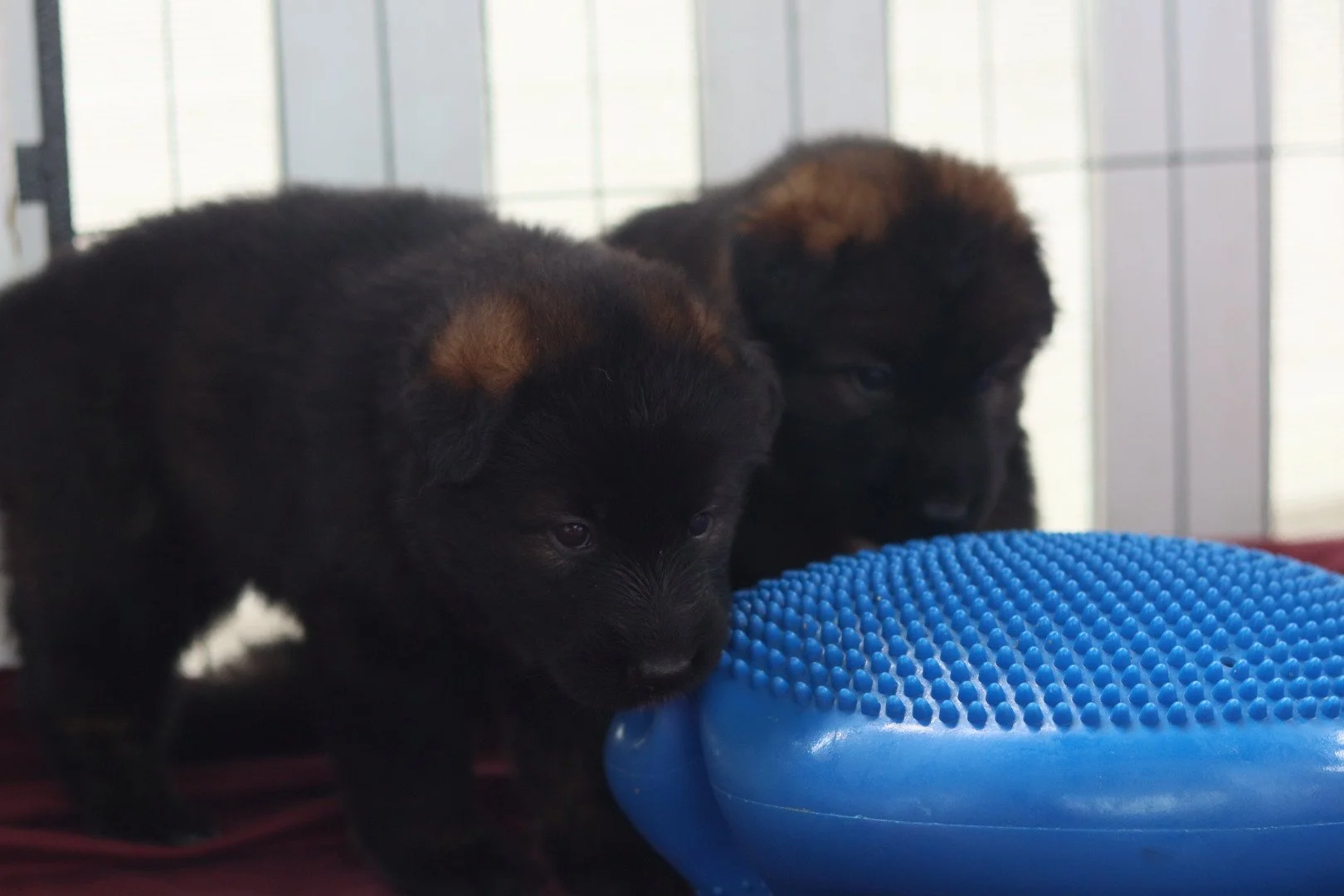
During this stage, we gradually introduce mild environmental variation — different textures underfoot, soft sound exposure, and continued daily handling.
Nail trimming begins early and continues throughout the eight weeks in calm, routine sessions. The goal isn’t just grooming — it’s helping puppies feel safe and steady during care.
4 – 6 Weeks
Early Structure & Confidence
As coordination improves, structure becomes more visible.
We begin gently guiding puppies toward designated potty areas separate from their sleeping space. We believe awareness and early habit formation helps to supports families later on.
Crate introduction also begins around this time. Crates are introduced in short, positive sessions and treated as calm resting spaces, not confinement. These early experiences help make transitions into new homes smoother.
Sound exposure expands gradually. Household noises, controlled recordings, and mild environmental sounds are layered thoughtfully — always age-appropriate, always measured.
Principles from the Puppy Culture framework guide this stage, emphasizing confidence-building through positive, supported experiences.
As personalities begin to emerge, we quietly observe. Recovery from small surprises. Curiosity toward new objects. Responses to structured cat exposure when appropriate. Patterns begin to reveal themselves long before formal testing.

7 Weeks (Around Day 49)
Understanding Temperament
Around seven weeks of age, we begin bringing together the observations and assessments gathered throughout each puppy’s development to help guide placement decisions.
Our evaluation process considers a variety of behavioral characteristics, including social engagement, environmental confidence, natural drives, independence, adaptability, and recovery from unfamiliar experiences. We use age-appropriate assessments and structured observations to better understand each puppy’s emerging temperament and potential suitability for different homes and working applications.
While standardized temperament tests, including Volhard, may provide additional information, we do not rely on any single evaluation to determine a puppy’s future potential or placement.
By this stage, we’ve spent weeks observing each puppy in everyday situations, allowing us to recognize patterns that may not be apparent during a formal assessment. These observations, combined with our understanding of each family’s goals and expectations, guide our placement decisions.

7–8 Weeks
Expanding Confidence & Independence
As puppies become more physically and mentally capable, we continue introducing new experiences that encourage confidence, problem-solving, and resilience. During this stage, each puppy is challenged with age-appropriate activities designed to build curiosity while allowing them to explore at their own pace.
We place greater emphasis on crate training, individual time away from littermates, short leash and collar sessions, grooming and handling, and supervised adventures outside. Puppies continue meeting new people, exploring novel surfaces, and experiencing everyday sights and sounds that prepare them for life beyond our home.
By eight weeks of age, our goal is for every puppy to have developed a strong foundation of confidence, adaptability, and early life skills. Puppies who are fully weaned and developmentally ready may begin transitioning into their new homes, where their education and development will continue.

Beyond The Beginning
For families seeking additional training and preparation before bringing their puppy home, we offer Beyond the Beginning, an exclusive board-and-train program with limited enrollment.
Building upon the developmental foundation established during their first eight weeks, this program provides dedicated one-on-one training tailored to each puppy’s temperament, developmental stage, and future home.
Whether preparing for sport, working disciplines, or life as a family companion, Beyond the Beginning offers a more individualized approach to early training, emphasizing practical skills, confidence, and a smooth transition into the home.